
The short answer
A heat pump is worth considering when your furnace or AC is failing, needs frequent repairs, or can't keep rooms comfortable, or when you want one electric system for heating and cooling. We inspect your home, ductwork, and electrical panel before recommending anything. We'll also tell you plainly if a repair makes more sense than a replacement.
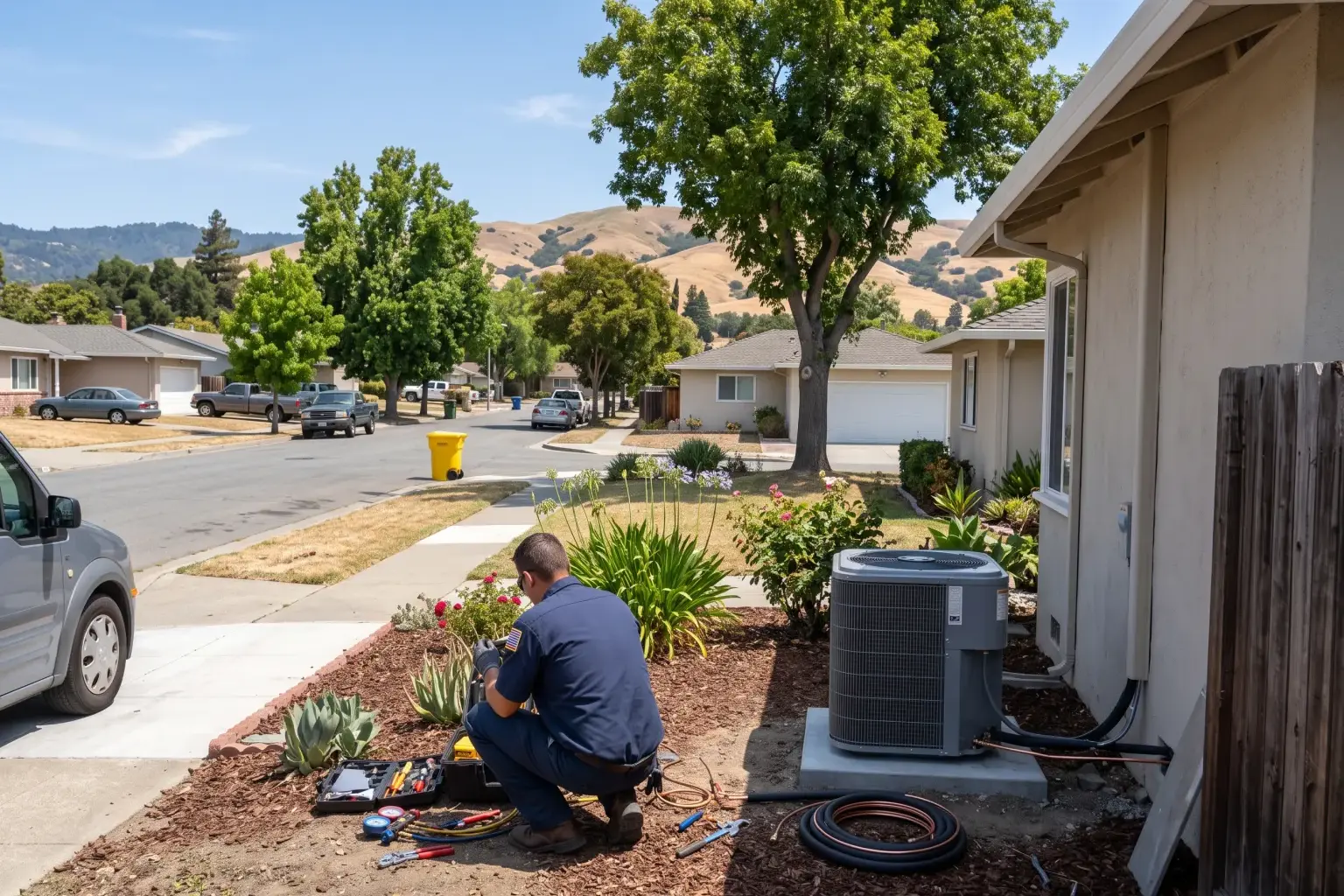
A heat pump heats and cools your home with one system. Instead of burning gas, it moves heat: indoors in winter and outdoors in summer. For many homes in Fremont, Newark, Union City, and Milpitas, a heat pump can replace both an aging furnace and a tired air conditioner. This page covers when a heat pump makes sense and what we check before recommending one. It also compares repairing your current equipment with replacing it, explains what drives the cost of a project, and walks through a visit from one of our technicians. If you're still weighing your options, it should help you ask better questions and make a decision that fits your house.
Signs a Heat Pump May Be the Right Next Step
Most homeowners start thinking about a heat pump when something stops working well. Sometimes it's a furnace that won't stay lit. Other times it's an air conditioner that runs all afternoon without cooling the upstairs. A failing system is a natural time to compare options, since you'll be spending money either way.
Other signs are slower to show up. Rising energy bills, uneven temperatures from room to room, and more frequent service calls all suggest your current equipment is losing ground. If you already plan to replace your AC, a heat pump can cover cooling and most or all of your heating with a single outdoor unit.
- Your furnace or air conditioner is near the end of its service life or needs a major repair
- Some rooms stay too hot in summer or too cold in winter
- Repairs are getting more frequent
- You want to cut back on gas use or move toward an all-electric home
- You're adding a room, finishing a garage, or converting space that has no heating or cooling
- You're replacing your AC anyway and want heating included
What We Check Before Recommending a System
A heat pump has to be matched to your house, not just to the size of the old unit. Bay Area weather is mild compared with much of the country, with dry summers and damp, cool winters. But conditions still vary. Areas closer to the Bay tend to stay cooler, while inland spots and homes toward the southern Santa Clara Valley run noticeably hotter in summer. We size equipment for how your home actually behaves.
During the assessment, we look at the parts of your home that affect performance and installation. What we find decides whether a ducted system, a ductless mini-split, or a mix of both makes the most sense.
- Square footage, ceiling heights, insulation, windows, and sun exposure
- Condition, size, and leakage of existing ductwork
- Electrical panel capacity and available circuits
- Where an outdoor unit can sit with good airflow and reasonable noise levels
- Condensate drainage and the location of the indoor equipment
- Your current furnace, AC, and thermostat setup
- Rooms that are consistently uncomfortable
Repair, Replace, or Convert: Your Options
Not every problem calls for a new system. If your furnace or AC is in reasonable shape and the issue is a part like a capacitor, igniter, blower motor, or control board, a repair is often the sensible choice. We'll explain what's wrong and what it involves, and we'll give you our honest read on whether the rest of the system is worth keeping.
Replacement makes more sense when the equipment is old, when major components are failing, or when the cost of repeated repairs keeps adding up. At that point, you can usually choose between a like-for-like replacement and a switch to a heat pump. A hybrid setup is another option: a heat pump does most of the work, and a furnace serves as backup.
Local rules are worth understanding, but they shouldn't rush you. The Bay Area Air District's appliance rules don't require you to replace working equipment. They apply only when a furnace or water heater fails or is replaced. Gas furnaces manufactured from 2029 on must meet a zero-NOx emission standard, which in practice points many homeowners toward heat pumps after that date. The zero-NOx date for small water heaters was set for 2027, and the Air District Board has been considering amendments that could delay it. Check the current rule before planning a water heater replacement.
On incentives: the federal Energy Efficient Home Improvement Credit covered qualifying heat pumps placed in service before the end of 2025. It isn't available for new installations now. Bay Area homeowners can still check BayREN and their local clean energy provider for heat pump and electrification incentives. Amounts and availability change by funding cycle, so we confirm the current offer before including it in any quote.
What Affects the Cost of a Heat Pump Installation
Every home is different, so we don't quote a heat pump without seeing the house first. Several factors have the biggest effect on the final price, and we'll walk you through how each one applies to your home.
- System type: ducted, ductless mini-split, or a combination
- Capacity and efficiency level of the equipment
- Whether existing ductwork can be reused or needs sealing, resizing, or replacement
- Electrical work, such as a new circuit or a panel upgrade
- Number of indoor units and zones for ductless systems
- Access to the attic, crawlspace, or closet where equipment goes
- Removing and disposing of old equipment
- Permits and inspections required by your city
- Add-ons such as a new thermostat, air filtration, or a hybrid backup furnace
How a Visit Works
It starts with a conversation about what's bothering you, whether that's a broken system, high bills, or rooms that never feel right. When a technician arrives, they'll ask about your comfort concerns, look over your current equipment, and go through the home assessment described above. If your system has a fixable problem, we'll tell you.
After the assessment, we explain your options in plain language and put the recommendation in writing, so you can compare repair, replacement, and heat pump choices side by side. There's no pressure to decide on the spot. If you go ahead with an installation, we handle the permit, schedule the work, protect your floors and walkways, and remove the old equipment. Before we leave, we test the system and show you how to use the thermostat. We'll also explain how often to change the filter and what basic upkeep keeps the heat pump running well.
Heat Pump Installation by city
- Heat Pump Installation in NewarkLocal service & repairs
- Heat Pump Installation in Union CityLocal service & repairs
- Heat Pump Installation in HaywardLocal service & repairs
- Heat Pump Installation in East Palo AltoLocal service & repairs
- Heat Pump Installation in Menlo ParkLocal service & repairs
- Heat Pump Installation in MilpitasLocal service & repairs
- Heat Pump Installation in Mountain ViewLocal service & repairs
- Heat Pump Installation in PleasantonLocal service & repairs
- Heat Pump Installation in Redwood CityLocal service & repairs
- Heat Pump Installation in SunnyvaleLocal service & repairs
- Heat Pump Installation in AthertonLocal service & repairs
- Heat Pump Installation in Palo AltoLocal service & repairs