
The short answer
If your furnace needs frequent repairs, has a damaged heat exchanger, or no longer heats your home evenly, replacement is usually worth considering. We inspect the whole system and compare a repair, a new gas furnace, and a heat pump. Then we give you a written quote based on your home.
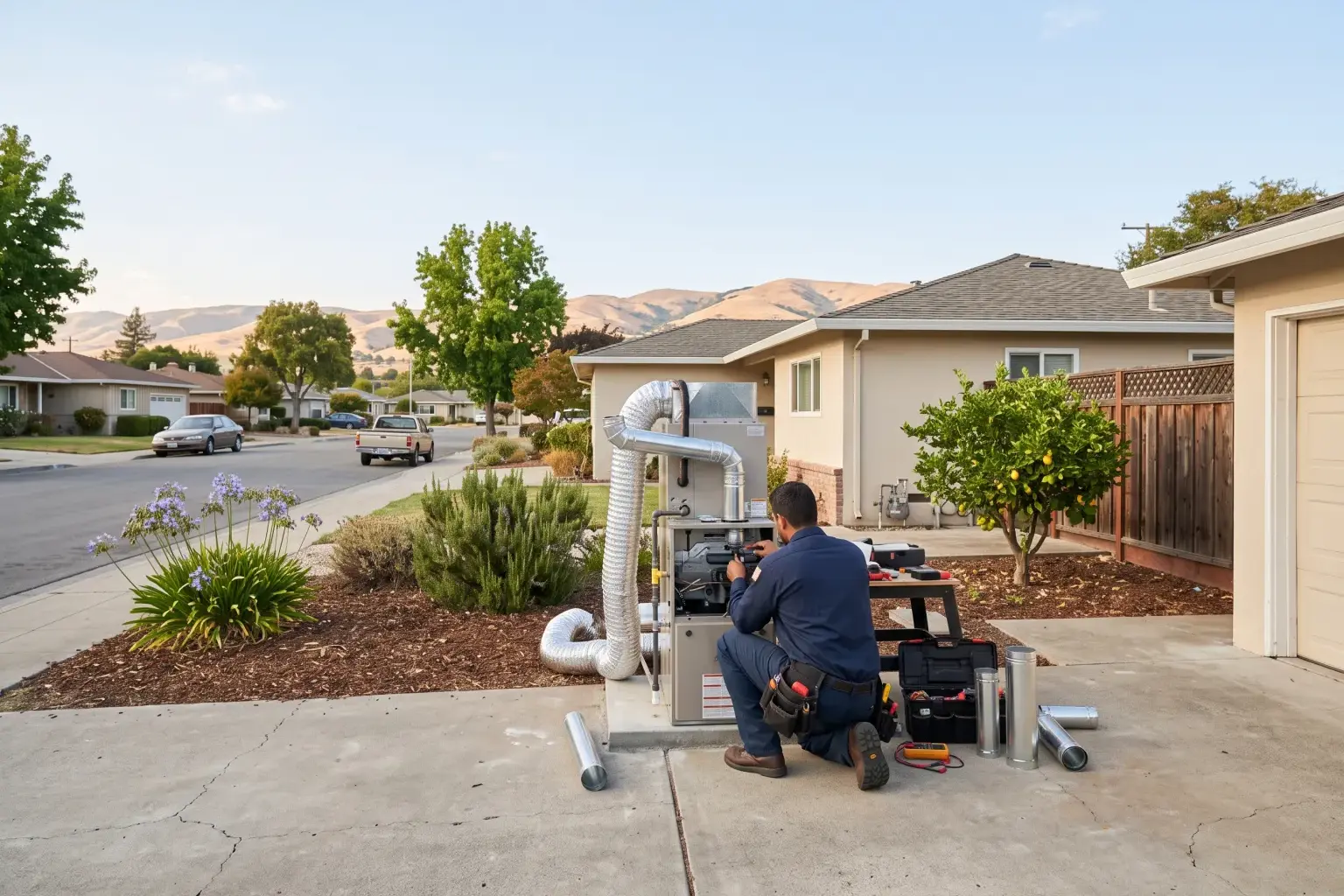
A furnace that won't keep up, keeps breaking down, or is near the end of its life is worth a careful look before winter settles in. ClimateEdge HVAC Service installs furnaces for homeowners in Fremont, Newark, Union City, Milpitas and nearby cities. We help you decide whether a repair, a new gas furnace, or a heat pump makes the most sense. This page covers the signs that point toward replacement, what we inspect, how we compare your options, what drives the cost of a project, and what to expect from the first visit through startup.
Signs You May Need a New Furnace
Bay Area winters are mild, so many local furnaces run fewer hours than they would in colder regions. That can hide problems for a long time. These are the signs that most often lead to a replacement conversation:
One sign on its own does not always mean replacement. A noisy blower motor or a failed igniter is often a simple repair. The overall pattern matters, which is why every recommendation starts with an inspection.
- Repairs are becoming routine, or the same parts keep failing
- Rooms that used to stay comfortable now run cold, or the system runs long cycles to reach the thermostat setting
- Cracks, heavy rust or corrosion on the heat exchanger or burner area
- Yellow or flickering burner flames, soot around the unit, or a carbon monoxide alarm. If an alarm sounds, leave the home and contact emergency services or your gas utility first.
- Banging, rattling or loud squealing that comes back after repairs
- Gas bills climbing even though you use the heat the same way
- More dust, dry air or stale odors in the house than before
What We Check Before Recommending Anything
A sound installation recommendation depends on the whole system, not just the furnace cabinet. During the assessment we look at:
We also ask how the house actually feels. Cold bedrooms, a hot upstairs, or rooms that never warm up often point to duct or airflow problems that a new furnace alone won't fix. We size a replacement furnace from the home itself, not from the label on the old unit.
- Heat exchanger condition, burners, flame quality and ignition
- Venting and flue path, including clearances and whether the existing vent suits the efficiency type of a new furnace
- Gas supply line, shutoff valve and connections
- Combustion air and the space around the unit, whether it sits in a garage, attic, closet or crawlspace
- Ductwork condition, leaks, sizing and insulation
- Return air paths and filter setup
- Thermostat and wiring, and whether you have or plan to add central air
- Electrical service, which matters if a heat pump is an option
Repair, Replace, or Switch to a Heat Pump
Once we know the condition of your system, we explain the realistic options in plain terms:
Local rules are part of this decision. Under Bay Area Air District Rule 9-4, natural gas furnaces manufactured starting in 2029 must meet a zero-NOx emission standard. In practice, that points homeowners toward heat pumps when a furnace is replaced after that date. The rules do not require you to replace working equipment. They apply only when an existing furnace fails or is replaced. If your furnace is in good shape, there is no need to rush. If it is near the end of its life, it helps to understand how the timing affects your choices.
If you are also planning to replace a gas water heater, check the current status of Rule 9-6 first. The zero-NOx date for small water heaters was set for 2027, and the Air District Board has been considering amendments that could delay it.
On incentives: the federal Energy Efficient Home Improvement Credit (25C) covered qualifying heat pumps placed in service before December 31, 2025. It is not available for new installations now. Bay Area homeowners can still check BayREN and their local clean energy provider for current heat pump and electrification incentives. Amounts and availability change with each funding cycle, so we confirm the current offer before including it in a quote.
- Repair: Makes sense when the furnace is structurally sound, the heat exchanger is intact, and the problem comes down to a specific part.
- New gas furnace: Often the right call when the heat exchanger is damaged, repairs keep piling up, or the unit is worn out and inefficient. We match the efficiency level, venting and blower type to your home.
- Heat pump: Provides both heating and cooling from one system, which suits the mild local climate. It may require electrical upgrades, so we compare it side by side with a furnace.
What Affects the Cost of a Furnace Installation
Every furnace installation is priced to the home. You get a written quote after the assessment. These are the main factors that affect it:
If you are weighing a furnace against a heat pump, we can price both so you can compare the trade-offs together.
- Furnace type and efficiency level, such as a standard unit or a high-efficiency condensing model, and single-stage, two-stage or variable-speed operation
- The correct heating capacity for your home's size, layout and insulation
- Where the unit is installed and how easy it is to reach
- Venting changes, such as new PVC venting and a condensate drain for a high-efficiency model
- Duct repairs, sealing or modifications
- Gas line or electrical updates
- Permit requirements in your city
- Removal and disposal of the old equipment
- Add-ons such as a new thermostat, upgraded air filtration, or a matching air conditioner or coil
How a Furnace Installation Visit Works
Here is what to expect from start to finish:
A straightforward furnace swap is often finished in a day. Jobs that involve venting changes, duct work or a switch to a heat pump can take longer. We give you the expected timeline before work begins.
- Assessment: A technician inspects the furnace, venting, ducts and controls, and asks about any comfort problems in the home.
- Options and quote: We walk through repair and replacement options, answer your questions, and provide a written quote.
- Scheduling and permits: We set an installation date and take care of the permit process your city requires.
- Installation day: We protect floors and work areas, shut off gas and power, remove the old unit, and set the new furnace. Then we connect the venting, gas, electrical and ductwork.
- Startup and testing: We check gas pressure, ignition, flame, venting draft, temperature rise and airflow. We also confirm the thermostat controls the system correctly.
- Walkthrough: We show you how to change the filter, where the shutoffs are, and what routine maintenance the furnace needs.