
The short answer
Duct cleaning makes sense when there's a specific reason, such as visible debris, a recent remodel, pests, a musty smell, or weak airflow. We inspect first, then tell you whether your ducts need cleaning, targeted repairs, or replacement, so the work matches the actual problem.
Your ducts carry all the heated and cooled air through your home. When they fill with dust, construction debris, or pest droppings, or when they leak into the attic or crawlspace, you notice it: uneven rooms, stale air, and a system that runs longer than it should. ClimateEdge HVAC Service cleans and inspects duct systems for homeowners in Fremont, Newark, Union City, Milpitas, and nearby cities. We'll tell you plainly whether cleaning will help, whether a section needs repair, or whether the ductwork has reached the end of its useful life.
Signs You Need Duct Cleaning
Most homes don't need duct cleaning every year. It makes sense when something specific has gotten into the system or when the air from your vents points to a problem. Here are the signs we look for:
Allergies or dust alone don't always mean the ducts are the cause. A clogged filter, a leaking return duct pulling in attic air, or ordinary household dust can cause similar symptoms. That's why we inspect before we recommend cleaning.
- Visible dust, lint, or debris puffing out of supply registers when the system starts
- Return grilles that collect dust again within days of being wiped down
- Recent remodeling, drywall work, or floor sanding, especially if the system ran during the project
- Signs of rodents or insects in the attic, crawlspace, or ductwork, including droppings or nesting material
- A musty smell when the heat or air conditioning turns on, or visible mold on duct surfaces or near the air handler
- Moving into a home where you don't know when the ducts were last inspected
- Rooms that get noticeably less airflow than they used to
What We Check During a Duct Inspection
Every visit starts with a look at the whole air path, not just the vents. Where we can reach, we use a camera to see inside the ducts. We also check the parts of the system that usually cause airflow and air quality problems.
If we find mold, we'll show you what we see and explain your options. Mold growth is often tied to a moisture problem, such as a sweating duct or a condensate issue at the air handler. Cleaning alone won't solve it until someone fixes the moisture source.
- Supply and return ducts for dust buildup, debris, and pest contamination
- Flexible duct for crushed, kinked, sagging, or disconnected runs in the attic or crawlspace
- Joints, collars, and plenum connections for gaps and failed tape or mastic
- Duct insulation for tears, compression, or missing sections
- The return side, including the filter rack, for leaks that pull in attic or garage air
- The blower wheel and evaporator coil, since a dirty blower or coil will put dirt back into clean ducts
- Registers and grilles for blockage, damage, and proper fit
Clean, Repair, or Replace: Choosing the Right Fix
Different duct problems need different fixes. After the inspection, we'll explain which of these options makes sense for your home.
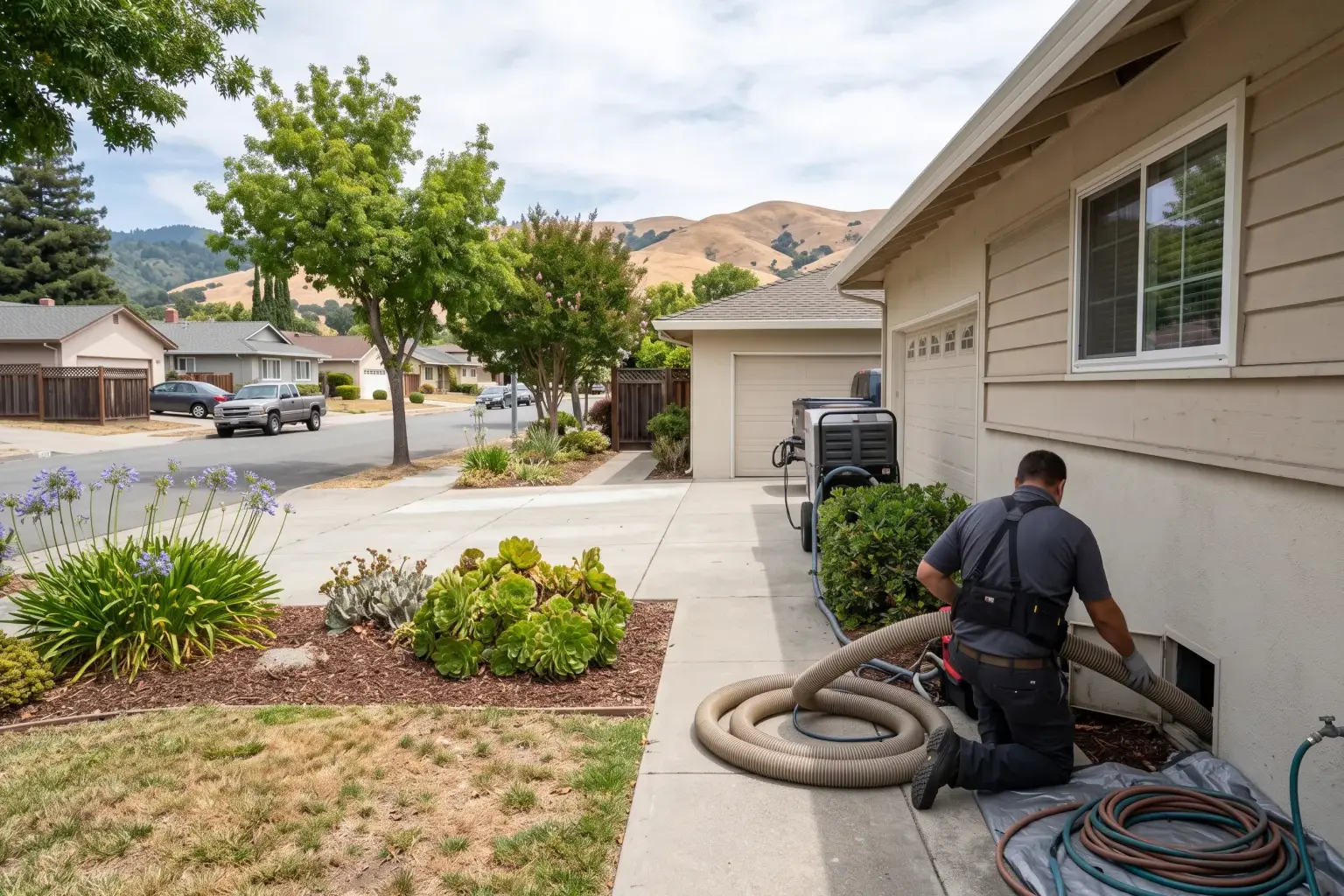
Cleaning is the right choice when the ductwork is in sound condition but dirty. Our negative-pressure equipment pulls debris out of the ducts while we loosen buildup from the duct surfaces. Then we clean the registers and grilles.
Repair fits when most of the system is in good shape but specific sections are leaking, crushed, or disconnected. That can mean resealing joints with mastic, replacing a damaged run of flex duct, reattaching a fallen connection, or adding insulation where it's missing. Many homes in the Fremont area have ducts in attics or crawlspaces. A disconnected run there can dump conditioned air outside the living space for years without anyone noticing.
Replacement is worth considering in several cases: flex duct that is brittle or widely damaged, insulation that has broken down throughout, contamination too severe to clean, or a duct layout that never delivered good airflow. It also comes up when you're switching equipment. If you're planning to replace a gas furnace, Bay Area Air District rules set a zero-NOx standard for natural gas furnaces manufactured from 2029, and in practice that points many homeowners toward heat pumps. Those rules don't require you to replace working equipment. But if you're changing systems anyway, it's a good time to make sure the ducts are sized and sealed for the new equipment. BayREN and your local clean energy provider may offer electrification incentives. Because amounts and availability change, we confirm the current offer before including it in a quote.
What Affects the Cost of Duct Cleaning
We give you a clear quote after the inspection. These factors change the scope of the job:
- The size of the home and the number of supply and return vents
- Where the ducts run and how easy they are to reach, such as a tight crawlspace or a low-clearance attic
- The type of duct (rigid metal, duct board, or flexible duct), since each is cleaned differently
- How much debris or contamination is present, including pest cleanup
- Whether the blower, coil, or other equipment also needs cleaning
- Any repairs, sealing, or insulation work found during the inspection
- Whether some sections need replacement rather than cleaning
How a Duct Cleaning Visit Works
We start by asking what you've noticed, such as dust, smells, weak airflow, or a recent project. The technician then inspects the system, shows you photos or camera footage of what's inside, and explains whether cleaning, repair, or replacement makes sense.
If you decide to go ahead with cleaning, we protect the floors near the work area, cover the registers, and connect our equipment to the system. We clean each duct run, then the registers and grilles, and check the blower area. When we finish, we can replace the filter if you'd like, and we turn the system back on to confirm good airflow at the vents.
Before we leave, we'll go over what we found and anything to watch for. That might be a filter schedule that fits your household or a section of duct to keep an eye on.