
The short answer
Yes, ClimateEdge HVAC Service repairs, installs and maintains heating and cooling systems in Los Altos, CA (94024), about 13 miles south of our Fremont base. We handle AC, furnaces, heat pumps, ductless mini-splits, duct cleaning and indoor air quality. We can also explain how Bay Area Air District rules may affect a future furnace replacement.
ClimateEdge HVAC Service repairs and installs heating and cooling systems for homes in Los Altos, CA, ZIP code 94024. Los Altos is about 13 miles south of our base in Fremont, and we also serve nearby Mountain View, Palo Alto, Sunnyvale, East Palo Alto and Menlo Park. Your air conditioner may have quit during a warm stretch, your furnace may be short-cycling on a damp winter morning, or you may be weighing a heat pump. This page explains what we do in Los Altos and what to consider before you call.
How the Santa Clara Valley Climate Affects Your HVAC System
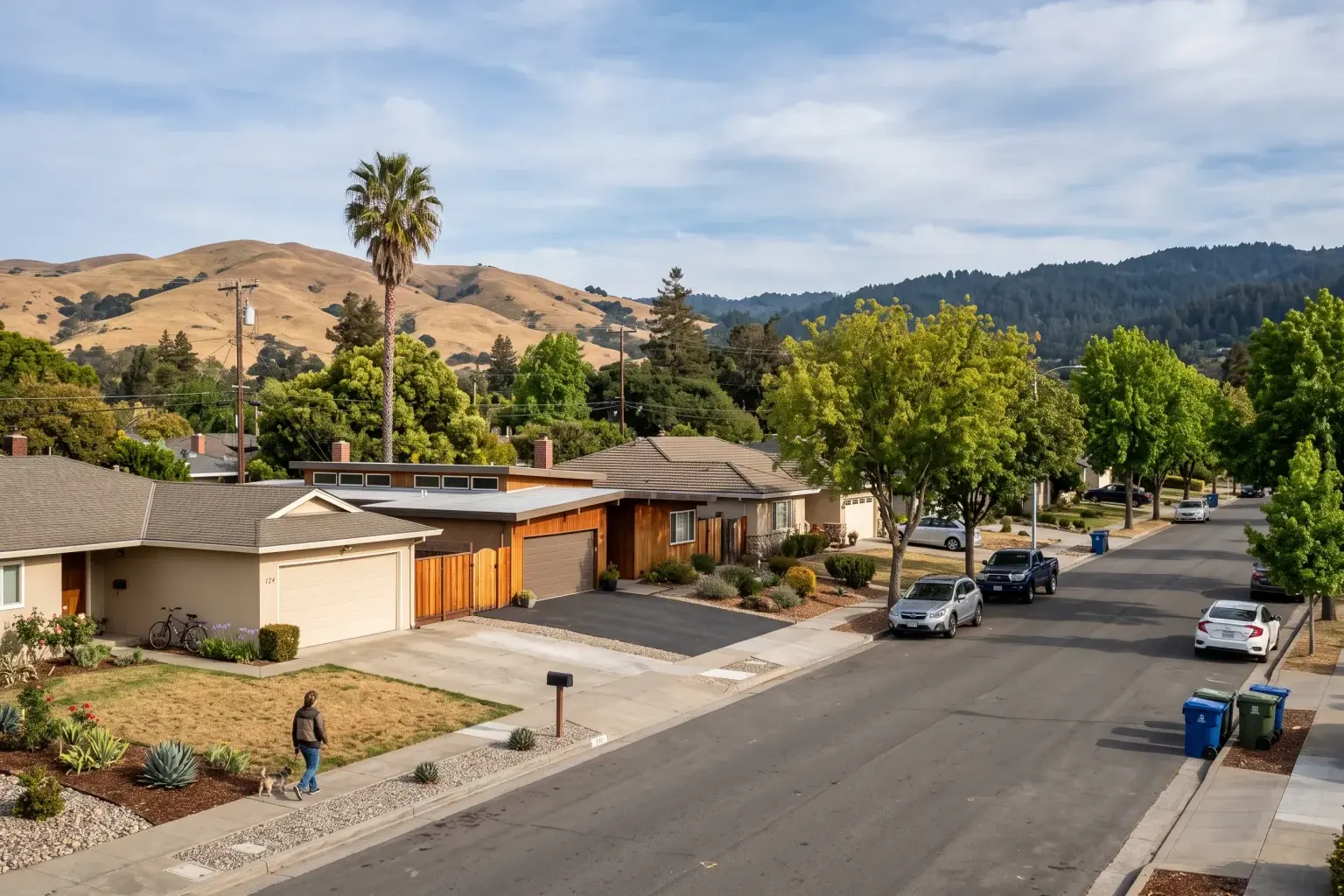
Los Altos is in Santa Clara County, where the valley has a Mediterranean climate with dry summers and mild, damp winters. Summer heat is real, and inland and southern parts of the valley run noticeably hotter than areas near the Bay. How hard your air conditioner works depends on your location, your home's insulation and how much afternoon sun it gets. Winters rarely demand nonstop heating. Instead, heat tends to run in spells on cool mornings and evenings.
That pattern shapes the problems we see. An AC system can sit unused for months and then get pushed hard during a warm week. That is often when a weak capacitor, a dirty condenser coil or a refrigerant leak shows up. A furnace that sat idle all summer may have dust on the burners or a dirty flame sensor on the first cold night. Mild winters are also why heat pumps suit this area well. One system handles both heating and cooling, and the valley rarely asks it to work in extreme cold.
HVAC Services We Offer in Los Altos
We provide the following services for homes in the 94024 ZIP code:
- AC Repair: warm air from the vents, frozen coils, tripped breakers and outdoor units that won't start.
- AC Installation: sizing and installing a new central air system when repair no longer makes sense.
- Heating Repair and Furnace Repair: no-heat calls, ignition and flame sensor problems, blower issues and short cycling.
- Furnace Installation: replacing an aging gas furnace, with a clear explanation of how Air District rules may affect your choice.
- Heat Pump Installation: one system for heating and cooling, a good fit for mild valley winters.
- Ductless Mini-Split Installation: for additions, converted garages, rooms that never get comfortable and homes without ductwork.
- HVAC Maintenance: seasonal tune-ups for cooling before summer and for heating before winter.
- Duct Cleaning: removing built-up dust and debris from supply and return ducts.
- Indoor Air Quality: filtration and ventilation options for dust, pollen and stale air in a closed-up house.
Bay Area Air District Rules and Current Incentives
If you are planning a furnace replacement, the Bay Area Air District rules matter. Under Rule 9-4, natural gas furnaces manufactured from 2029 must meet a zero-NOx emission standard. In practice, that points homeowners toward heat pumps when a furnace is replaced after that date. The rules do not require you to replace working equipment. They apply only when an existing furnace or water heater fails or is replaced. If your furnace runs well today, repair and regular maintenance are still reasonable options.
Water heaters fall under a separate rule, Rule 9-6. It set a zero-NOx date of 2027 for small water heaters, and the Air District Board is considering amendments in November 2026 that could delay that date. Check the current rule before you plan a water heater replacement.
On incentives, the federal Energy Efficient Home Improvement Credit (25C) covered qualifying heat pumps placed in service before December 31, 2025. It is not available for new installations after that date. Bay Area homeowners can check BayREN and their local clean energy provider for current heat pump and electrification incentives. Amounts and availability change with each funding cycle, so we confirm the current offer before we include it in a quote.
Repair or Replace: What to Expect
We start every visit by finding the actual cause of the problem. Then we explain what we found and your options in plain terms. When we weigh repair against replacement, we look at the system's age, how often it has needed repairs, and whether it keeps every room comfortable. We also consider whether you want to move from gas to electric now or later. We won't push you to replace equipment that is working.
Before you call, a few quick checks can save time. Confirm the thermostat is set to the right mode and has working batteries. Check that the breaker for the system hasn't tripped, and look at the air filter. Then note what you're seeing, such as unusual noises, short cycling or one room that is much warmer than the rest. Details like these help us diagnose the problem faster.
ZIP codes we serve
- 94024